

1: OS before the oil change
Engine flush in the old engine oil according to the product instructions. Then change the oil and filter.
OS: view application →

Two tasks. Two stages.
Engine flush in the old engine oil according to the product instructions. Then change the oil and filter.
OS: view application →

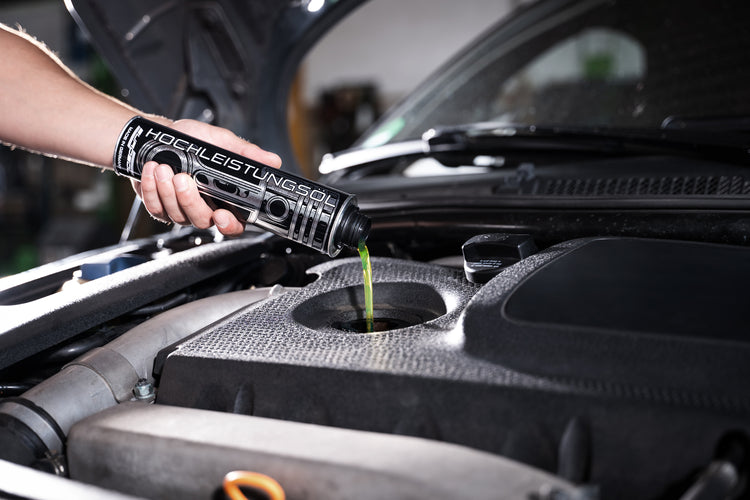
Additional care in fresh engine oil for suitable engines. Observe fill capacity, oil level and manufacturer instructions.
HO: view application →BS and DS belong in the fuel system. Motorcycles · Choose a vehicle · Boat engines · Garden equipment · Product documents
Read more: EUROSOL Insider
Four chapters on common engine issues. Free PDF in German, 7 pages.
EUROSOL product guide
Select by engine type, intended purpose, and time of application.



Translated from GermanI am driven by the desire to solve technical problems at their source. When engines stay cleaner and components remain usable for longer, people, technology and the environment benefit. Our customers have valued this for over 30 years, and we regularly celebrate our success together with them!
Helmut Ohnheiser Founder of EUROSOL
Care for your car’s petrol engine, from the fuel system to the next oil change.

Care for your diesel car or lorry, from daily driving to long journeys.
Well maintained on two or three wheels. For motorcycles, trikes, scooters, mopeds and light motorbikes.

 BS (Petrol System)
For petrol engines · before filling upDetails & dosage
BS (Petrol System)
For petrol engines · before filling upDetails & dosage
 OS (Oil System Engine Flush)
Before changing the oil · up to 6 l oilDetails & dosage
OS (Oil System Engine Flush)
Before changing the oil · up to 6 l oilDetails & dosage
 HO (High Performance Oil Additive)
After changing the oil · up to 10 l oil
* Do not use HO (High Performance Oil Additive) in engines where the clutch shares the same oil circuit. The increased lubricity can cause clutch slip and loss of traction.
Details & dosage
HO (High Performance Oil Additive)
After changing the oil · up to 10 l oil
* Do not use HO (High Performance Oil Additive) in engines where the clutch shares the same oil circuit. The increased lubricity can cause clutch slip and loss of traction.
Details & dosage
Ready for the garden season. With suitable engine care for lawnmowers, lawn tractors and other engine powered garden equipment.
 BS (Petrol System)
For petrol engines · before filling upDetails & dosage
OS (Oil System Engine Flush)
Before changing the oil · up to 6 l oilDetails & dosage
HO (High Performance Oil Additive)
After changing the oil · up to 10 l oil
* Do not use HO (High Performance Oil Additive) in engines where the clutch shares the same oil circuit. The increased lubricity can cause clutch slip and loss of traction.
Details & dosage
BS (Petrol System)
For petrol engines · before filling upDetails & dosage
OS (Oil System Engine Flush)
Before changing the oil · up to 6 l oilDetails & dosage
HO (High Performance Oil Additive)
After changing the oil · up to 10 l oil
* Do not use HO (High Performance Oil Additive) in engines where the clutch shares the same oil circuit. The increased lubricity can cause clutch slip and loss of traction.
Details & dosage
Engine care for daily site work. Suitable for excavators, wheel loaders and other construction machinery.

Proper maintenance throughout sowing, harvesting and transport. Engine care tailored for tractors and farm machinery.

Engine maintenance for your time out on the water. From start of season to routine upkeep and winter layup.

Marine engine cleaning: dedicated care for petrol and diesel →
Prepare your oil change properly
Add EUROSOL Oil System Engine Flush to warm old engine oil according to product instructions.
Run the engine at idle for 10 minutes.
Change oil and filter according to manufacturer instructions.
Add EUROSOL High Performance Oil Additive to fresh engine oil according to fill capacity.
| Suitability and application |
 Diesel System
|
 Petrol System
|
 Oil System (Engine Flush)
|
 High Performance Oil Additive
|
|---|---|---|---|---|
| For petrol engines | Suitable | Suitable | Suitable | |
| For diesel engines | Suitable | Suitable | Suitable | |
| Add to the fuel tank | Suitable | Suitable | ||
| Add to the engine oil | Suitable | Suitable | ||
| After an oil change | Suitable | |||
| Before an oil change | Suitable | |||
| Clean the fuel system | Suitable | Suitable | ||
| Support the oil film and reduce friction | Suitable | |||
| Prepare the oil system for an oil change | Suitable |


